What Is 3D Jewelry Rendering? A Simple Guide
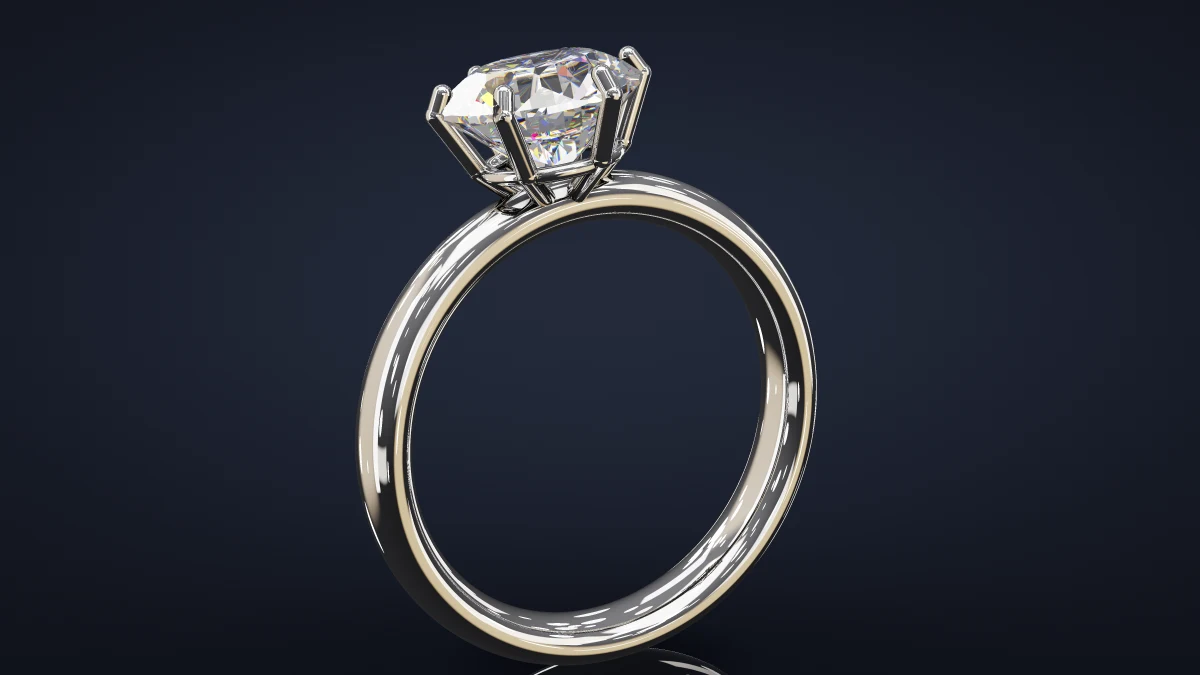
3D jewelry rendering is the process of creating a realistic image or video of a piece of jewelry from a digital 3D model. No camera and no finished piece are needed.
Jewelers, designers and online stores use it to show a design before it is made, to display every metal and stone option, and to build product pages with a consistent look.
How 3D jewelry rendering works
- The 3D model. A designer builds the piece in software such as Rhino, MatrixGold, ZBrush or Blender. The same model is often used for 3D printing and casting.
- Materials. Each part is given a material: yellow, white or rose gold, platinum, silver, diamond, sapphire and so on. Finishes such as polished, brushed or hammered are set here too.
- Lighting. Virtual lights are placed around the piece, much like softboxes in a photo studio. Jewelry is highly reflective, so lighting decides most of the final look.
- Camera. The artist chooses the angle, lens and depth of field.
- Rendering and finishing. The software calculates how light travels through the scene. The image is then checked and retouched where needed.
What you can create from one model
- Product images on white or light backgrounds for online stores and catalogs.
- Campaign images with mood lighting, surfaces and props.
- 360° turntable videos that show the piece from every side.
- Design approvals, so a customer can see a custom piece before it is cast.
- Variations of metal color or stone type without making each one.
What makes a render look real
A convincing render usually gets these details right:
- Reflections with clear light and dark areas, so the metal does not look flat or plastic.
- Gemstones that bend and split light correctly. See our guide to rendering realistic diamonds and gemstones.
- Slightly rounded edges, because real metal is never perfectly sharp.
- Soft contact shadows that place the piece on a surface.
- Accurate proportions that match the item a buyer will receive.
Where rendering has limits
A render is only as accurate as its model and materials. Natural stones differ in color and inclusions, so a render of an emerald or sapphire shows a representative stone, not a particular one. If you sell online, make sure each image matches the real product and tell buyers when an image is a render.
Next steps
If you are deciding between a render and a photo shoot, read 3D jewelry rendering vs photography. If you already have a design, our CAD file checklist will help you get it ready.